

By Dr. Shruthi Thennati
MBBS, MD Medicine | PgDip Endocrinology (UK) | DipIBLM
General Physician | Metabolic Physician | Lifestyle Medicine Practitioner
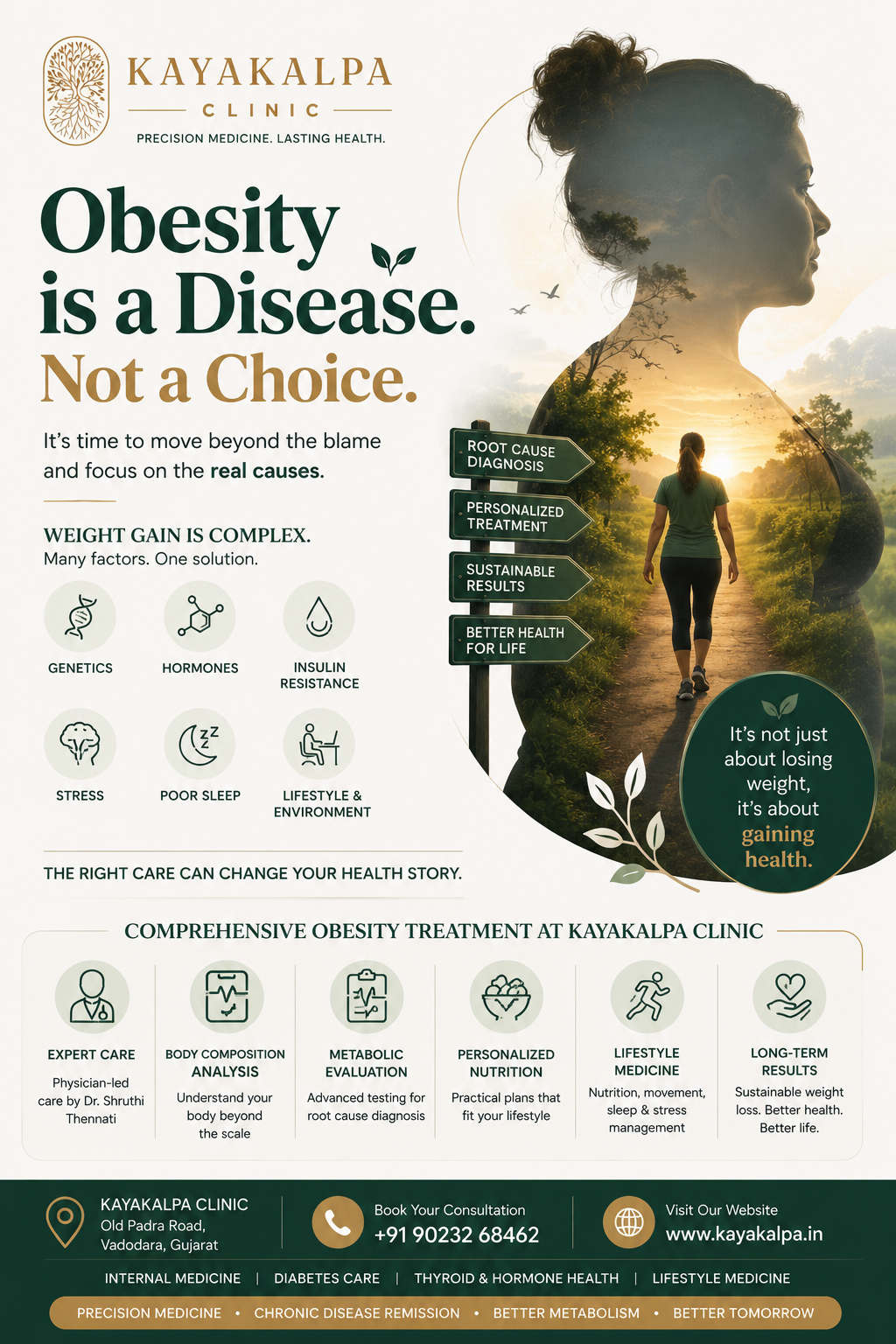
Obesity Is More Than a Matter of Willpower
For many years, obesity was viewed simply as the result of overeating or a lack of exercise. Today, medical science recognizes obesity as a complex, chronic disease influenced by biological, environmental, behavioral, and metabolic factors.
This shift is important because it changes how obesity should be treated. Rather than blaming individuals, healthcare professionals now focus on understanding the underlying causes and providing evidence-based, personalized care.
At Kayakalpa Clinic, Vadodara, obesity is approached as a medical condition that deserves comprehensive evaluation and long-term management — not quick fixes.
What Is Obesity?
Obesity is defined as excessive body fat that increases the risk of health problems. While Body Mass Index (BMI) is commonly used as a screening tool, it does not tell the whole story.
Two people with the same BMI may have very different levels of:
- Visceral fat
- Muscle mass
- Metabolic health
- Cardiovascular risk
That is why body composition and overall health assessment are equally important.
Why Does Weight Gain Happen?
Weight gain is rarely caused by a single factor. It often results from several interacting influences, including:
1. Genetics
Some individuals are genetically more likely to gain weight or store fat.
2. Hormones
Hormones such as insulin, leptin, ghrelin, and thyroid hormones play a major role in appetite, metabolism, and fat storage.
3. Insulin Resistance
Insulin resistance can increase fat storage, particularly around the abdomen, making weight loss more difficult.
4. Sleep and Stress
Poor sleep and chronic stress can alter hunger hormones, increase cravings, and reduce energy levels.
5. Lifestyle
Sedentary habits, highly processed foods, and irregular meal patterns also contribute to weight gain.
Why Obesity Increases the Risk of Chronic Disease
Obesity is closely linked with several health conditions, including:
- Type 2 Diabetes
- High Blood Pressure
- Fatty Liver Disease
- High Cholesterol
- Heart Disease
- Obstructive Sleep Apnea
- Osteoarthritis
- PCOS
- Certain cancers
Reducing excess body fat can significantly improve overall health and lower the risk of these complications.
Obesity Is Not Just About Body Weight
The location of body fat matters.
Visceral fat — fat stored around the abdominal organs — is more strongly associated with metabolic disease than fat stored under the skin.
This is why reducing waist circumference and improving metabolic markers are often more meaningful than focusing only on the number on the scale.
The Role of Lifestyle Medicine
Lifestyle Medicine forms the foundation of sustainable obesity treatment.
This includes:
Nutrition
Eating patterns that are balanced, practical, and sustainable.
Physical Activity
A combination of aerobic exercise and strength training to improve metabolic health.
Sleep
Restoring healthy sleep to support hormone regulation.
Stress Management
Reducing chronic stress to improve overall wellbeing.
Healthy Habits
Building routines that support long-term success rather than short-term restriction.
Can Obesity Be Treated Without Surgery?
For many individuals, yes.
A personalized, physician-supervised program that includes lifestyle modification and appropriate medical treatment can help improve health without surgery.
Treatment plans vary based on each person’s health profile, goals, and medical needs.
How Kayakalpa Clinic Approaches Obesity Treatment
At Kayakalpa Clinic, obesity care begins with understanding the whole person.
A comprehensive assessment may include:
- Detailed medical history
- Body composition analysis
- Blood sugar and HbA1c
- Thyroid evaluation
- Lipid profile
- Lifestyle assessment
- Sleep and stress evaluation
Based on these findings, an individualized plan is developed to support sustainable weight management and improve metabolic health.
When Should You Seek Medical Help?
Consider consulting a physician if:
- Your BMI is in the overweight or obesity range.
- You have diabetes, high blood pressure, or fatty liver disease.
- You have difficulty losing weight despite consistent efforts.
- You experience repeated cycles of weight loss and regain.
- Weight is affecting your quality of life or mobility.
Early intervention can reduce the risk of future complications.
Looking for Obesity Treatment in Vadodara?
If you’re searching for:
- Obesity Treatment in Vadodara
- Weight Loss Clinic in Vadodara
- Weight Loss Doctor in Vadodara
- Lifestyle Medicine Clinic in Vadodara
- Metabolic Physician in Vadodara
- Diabetes Doctor in Vadodara
- Female General Physician in Vadodara
Dr. Shruthi Thennati and the team at Kayakalpa Clinic provide evidence-based care designed to help patients improve their metabolic health and achieve sustainable weight management.
Frequently Asked Questions
Is obesity considered a disease?
Yes. Major medical organizations recognize obesity as a chronic disease influenced by genetics, hormones, metabolism, environment, and lifestyle.
Can obesity be reversed?
Many people can improve their metabolic health and reduce body fat through personalized lifestyle changes, medical guidance, and long-term follow-up.
Is BMI enough to assess obesity?
No. BMI is a useful screening tool, but body composition, waist circumference, and metabolic health provide a more complete picture.