

By Dr. Shruthi Thennati
MBBS, MD Medicine | PgDip Endocrinology (UK) | DipIBLM
General Physician | Metabolic Physician | Lifestyle Medicine Practitioner
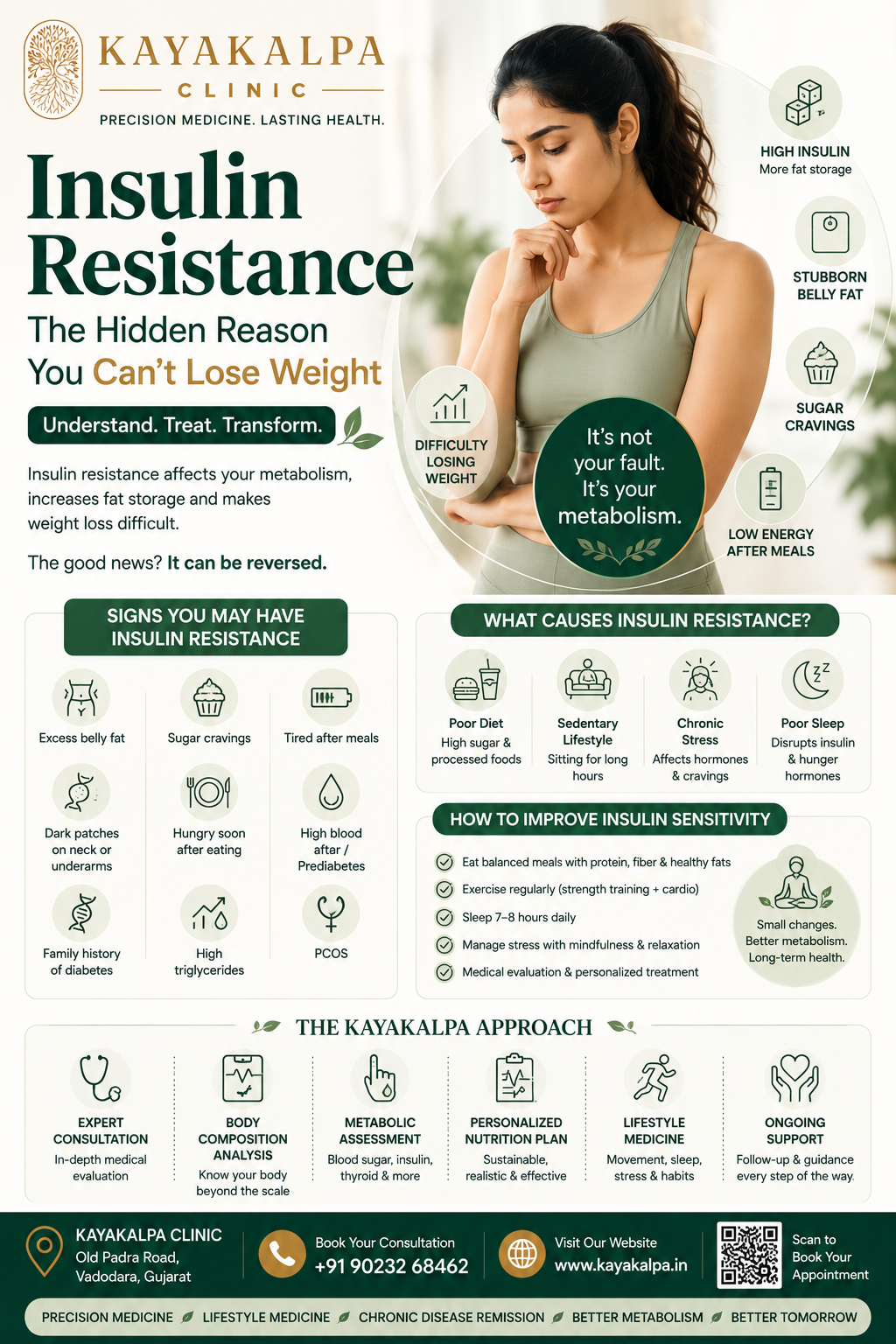
Are You Doing Everything Right but Still Not Losing Weight?
Many people follow healthy diets, exercise regularly, and stay committed to their weight-loss goals — yet the number on the scale barely changes.
If this sounds familiar, the reason may not be a lack of effort. One of the most common but often overlooked causes of stubborn weight gain is insulin resistance.
Insulin resistance affects millions of people, often years before diabetes develops. It can influence how your body stores fat, regulates blood sugar, and responds to food, making weight loss much more challenging.
At Kayakalpa Clinic, Vadodara, we help patients identify and manage insulin resistance through evidence-based medical evaluation, lifestyle medicine, and personalized care.
What Is Insulin?
Insulin is a hormone produced by the pancreas. Its primary role is to help glucose (sugar) move from the bloodstream into the body’s cells, where it is used for energy.
When the body responds well to insulin, blood sugar remains within a healthy range.
What Is Insulin Resistance?
Insulin resistance occurs when the body’s cells become less responsive to insulin. To compensate, the pancreas produces more insulin.
Over time, high insulin levels can:
- Increase fat storage
- Promote belly fat accumulation
- Increase hunger and cravings
- Make weight loss more difficult
- Raise the risk of prediabetes and Type 2 diabetes
Common Signs of Insulin Resistance
Many people do not notice symptoms in the early stages. However, common signs may include:
- Difficulty losing weight
- Excess fat around the waist
- Frequent sugar cravings
- Feeling hungry soon after meals
- Fatigue after eating
- Dark patches of skin on the neck or underarms (acanthosis nigricans)
- Elevated triglycerides
- Prediabetes
If you experience several of these symptoms, a medical evaluation may be beneficial.
Why Insulin Resistance Makes Weight Loss Harder
High insulin levels encourage the body to store energy as fat while making it more difficult to access stored fat for fuel.
This means that even when you’re eating fewer calories, your metabolism may not respond as expected.
Without addressing insulin resistance, repeated dieting can become frustrating and unsustainable.
Who Is at Higher Risk?
Your risk may be higher if you:
- Have excess abdominal fat
- Have a family history of diabetes
- Have PCOS
- Live a sedentary lifestyle
- Consume a diet high in ultra-processed foods
- Have high blood pressure or abnormal cholesterol
Early identification can help reduce the risk of future health complications.
Can Insulin Resistance Be Reversed?
In many cases, insulin sensitivity can improve through consistent lifestyle changes.
Evidence-based strategies include:
Balanced Nutrition
A diet rich in vegetables, whole grains, legumes, lean proteins, healthy fats, and minimally processed foods supports better blood sugar control.
Physical Activity
Regular exercise, including both aerobic activity and strength training, improves insulin sensitivity.
Quality Sleep
Adults should aim for 7–9 hours of quality sleep most nights.
Stress Management
Reducing chronic stress may improve hormonal balance and support metabolic health.
Medical Evaluation
Some individuals may benefit from additional medical assessment and treatment based on their overall health profile.
How Kayakalpa Clinic Helps
At Kayakalpa Clinic, our physician-led approach includes:
- Detailed medical consultation
- Blood sugar and HbA1c assessment
- Evaluation of metabolic health
- Body composition analysis
- Lifestyle assessment
- Personalized nutrition guidance
- Ongoing follow-up and support
The focus is on improving metabolic health — not just reducing body weight.
When Should You See a Doctor?
Consult a physician if you:
- Cannot lose weight despite healthy habits
- Have prediabetes or diabetes
- Have PCOS
- Notice increasing belly fat
- Experience frequent fatigue after meals
- Have abnormal blood sugar reports
Early intervention may reduce the risk of diabetes and other chronic conditions.
Looking for Insulin Resistance Treatment in Vadodara?
If you’re searching for:
- Insulin Resistance Treatment in Vadodara
- Weight Loss Clinic in Vadodara
- Diabetes Doctor in Vadodara
- Medical Weight Loss Vadodara
- Obesity Treatment in Vadodara
- Lifestyle Medicine Clinic in Vadodara
- Metabolic Physician in Vadodara
Dr. Shruthi Thennati and the team at Kayakalpa Clinic provide personalized, evidence-based care focused on sustainable weight management and metabolic health.
Frequently Asked Questions
Can insulin resistance occur without diabetes?
Yes. Many people have insulin resistance years before diabetes develops.
Does insulin resistance always cause weight gain?
Not always, but it commonly contributes to abdominal weight gain and makes weight loss more difficult.
Can lifestyle changes improve insulin resistance?
Yes. Healthy eating, regular physical activity, good sleep, stress management, and weight reduction can significantly improve insulin sensitivity.