

By Dr. Shruthi Thennati
MBBS, MD Medicine | PgDip Endocrinology (UK) | DipIBLM
General Physician | Metabolic Physician | Lifestyle Medicine Practitioner
Kayakalpa Clinic, Vadodara
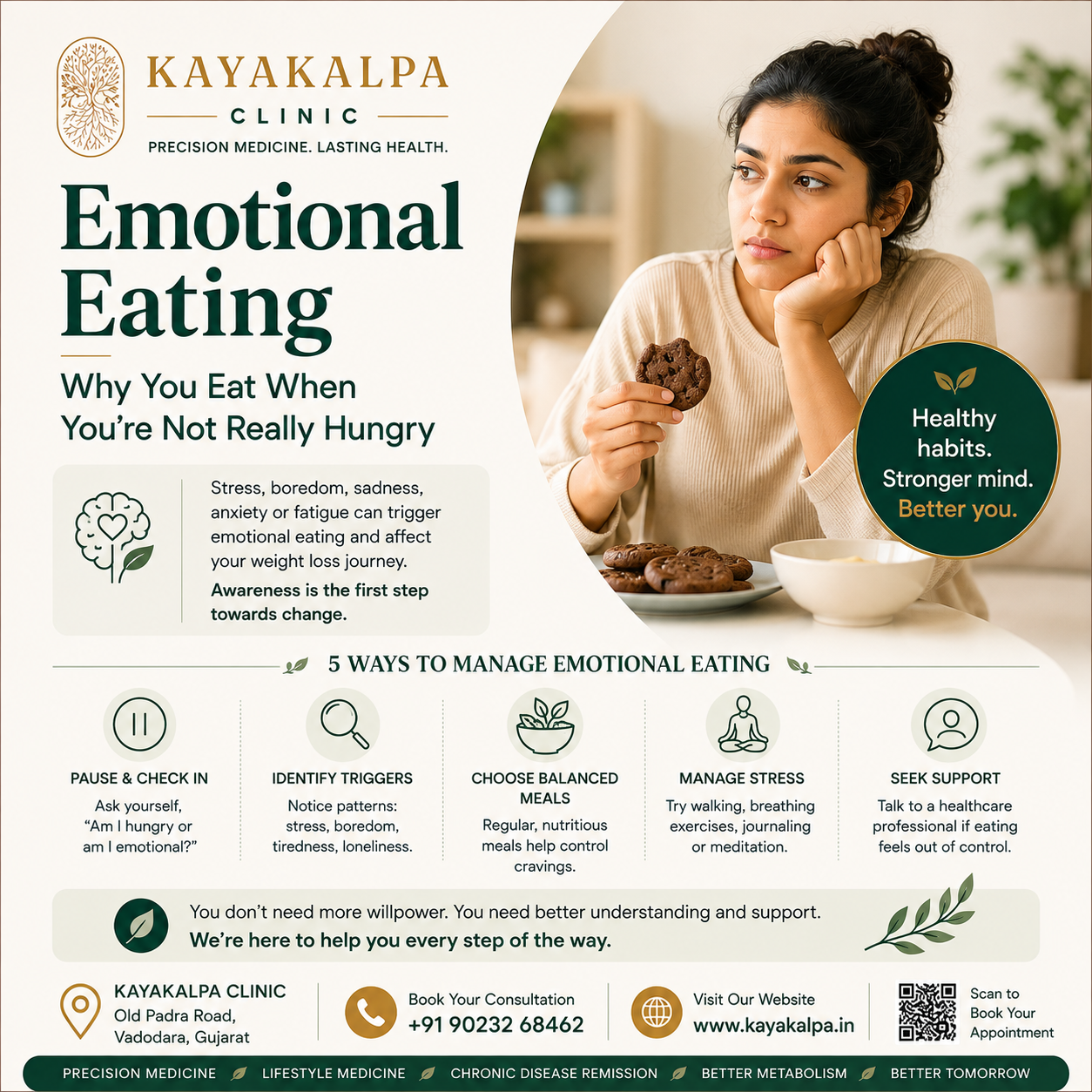
Emotional Eating: Why You Eat When You’re Not Really Hungry
Have you ever opened the refrigerator after a stressful day — even though you weren’t physically hungry?
Maybe it’s something sweet after a difficult day at work.
Maybe you snack while watching television.
Or perhaps you eat simply because you’re bored, tired or emotionally overwhelmed.
This is often called emotional eating.
And if you’re trying to lose weight, understanding the difference between physical hunger and emotional eating can be an important part of your journey.
What Is Emotional Eating?
Emotional eating means eating in response to emotions rather than physical hunger.
Common triggers include:
- Stress
- Boredom
- Anxiety
- Sadness
- Frustration
- Loneliness
- Fatigue
- Habit
It doesn’t mean that you lack willpower.
Eating is influenced by biology, environment, emotions and learned behaviors.
Emotional Hunger vs Physical Hunger
Physical hunger
Usually develops gradually and can be satisfied by different types of food.
Emotional hunger
Often appears suddenly and may create a strong desire for a specific food — particularly highly palatable foods.
Recognizing this difference can help you understand your eating patterns without judging yourself.
Why Emotional Eating Can Affect Weight Loss
If emotional eating happens frequently, it can make it harder to maintain a consistent eating pattern.
For example:
Stress → cravings → emotional eating → guilt → restrictive dieting → more cravings
This cycle can become frustrating.
The solution isn’t necessarily another restrictive diet.
Instead, identifying the trigger and developing healthier ways to respond can be more sustainable.
5 Ways to Manage Emotional Eating
1. Pause Before You Eat
Ask yourself:
“Am I physically hungry, or am I responding to an emotion?”
Even a short pause can create awareness.
2. Identify Your Triggers
Keep a simple note of when cravings occur.
Look for patterns involving stress, boredom, poor sleep or specific situations.
3. Don’t Follow Extreme Diets
Severe restriction can make hunger and cravings harder to manage.
4. Improve Sleep and Stress Management
Poor sleep and chronic stress can make healthy eating more difficult.
5. Get Professional Help When Needed
If eating feels out of control, involves frequent episodes of binge eating, or causes significant distress, speak with a qualified healthcare professional.
Weight Loss Isn’t Just About Food
At Kayakalpa Clinic, Vadodara, weight management is approached through Lifestyle Medicine, Precision Medicine and Metabolic Health.
Depending on the individual, your assessment may consider:
- Eating patterns
- Sleep
- Stress
- Physical activity
- Body composition
- Blood sugar and metabolic health
- Medical conditions
- Previous weight-loss attempts
The objective is to understand why weight gain is happening and create a realistic, personalized plan.
Looking for a Weight Loss Clinic in Vadodara?
If you’re repeatedly losing and regaining weight, struggling with emotional eating, or finding it difficult to maintain healthy habits, you don’t necessarily need another crash diet.
You may need a better understanding of the factors influencing your weight.
Kayakalpa Clinic, Vadodara provides physician-led weight management focused on sustainable health improvement.