

By Dr. Shruthi Thennati
MBBS, MD Medicine | PgDip Endocrinology (UK) | DipIBLM
General Physician | Metabolic Physician | Lifestyle Medicine Practitioner
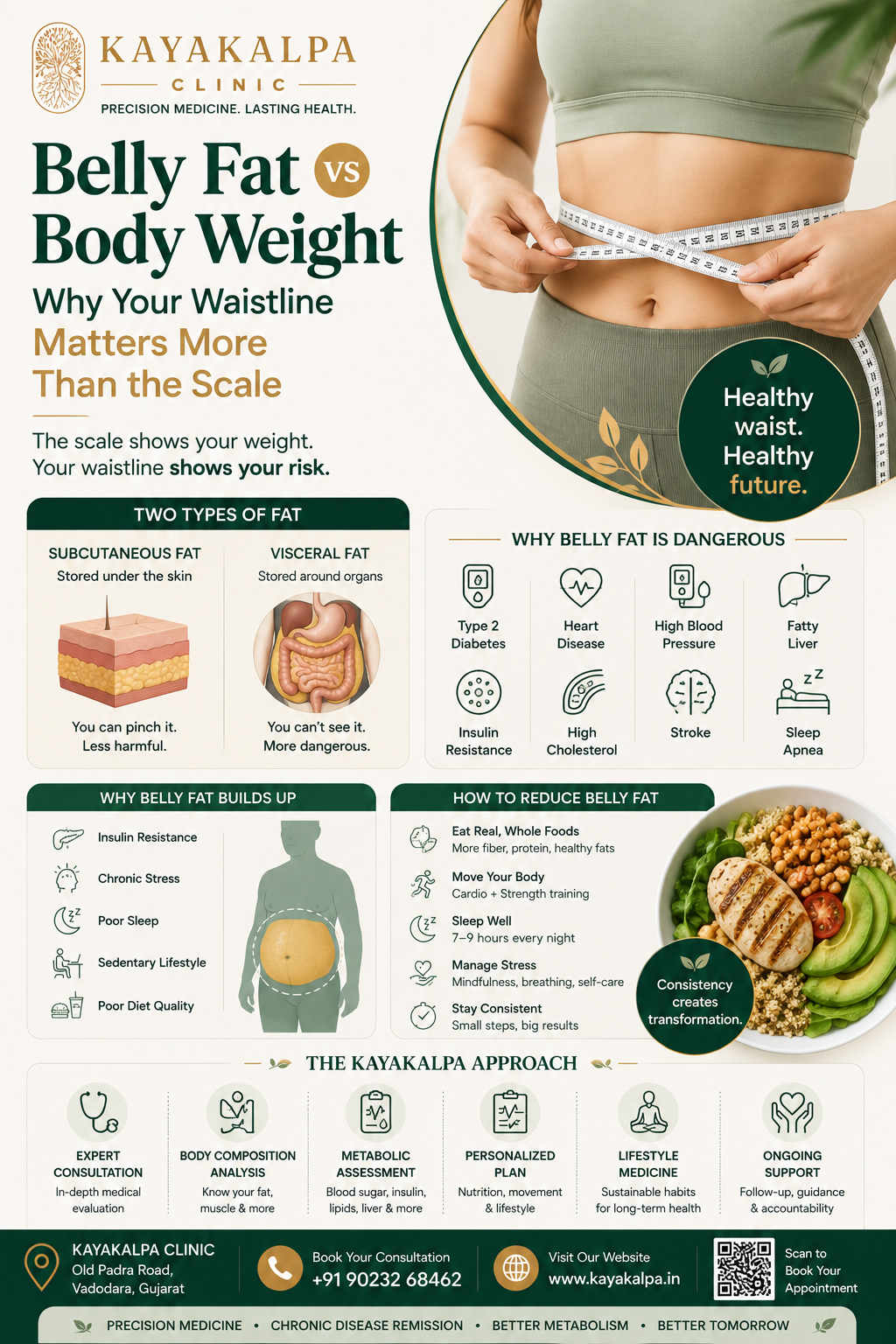
The Scale Doesn’t Tell the Whole Story
Many people judge their health by one number — their body weight. While body weight can provide useful information, it doesn’t reveal where fat is stored or how it may be affecting your health.
A person can have a “normal” weight and still carry excess fat around the abdomen. This type of fat, known as visceral fat, surrounds the internal organs and is associated with a higher risk of chronic diseases.
At Kayakalpa Clinic, Vadodara, we focus on improving metabolic health, not just reducing the number on the scale.
What Is Belly Fat?
Belly fat includes two main types:
Subcutaneous Fat
This is the fat located just beneath the skin. It is the fat you can pinch around your waist.
Visceral Fat
Visceral fat is stored deep inside the abdomen around organs such as the liver, pancreas, and intestines.
Unlike subcutaneous fat, visceral fat is metabolically active and produces inflammatory substances that can affect overall health.
Why Visceral Fat Is More Dangerous
Excess visceral fat has been linked to:
- Type 2 diabetes
- Insulin resistance
- Fatty liver disease
- High blood pressure
- High cholesterol
- Heart disease
- Stroke
- Sleep apnea
Reducing visceral fat can improve metabolic health even before there is a large change in body weight.
Signs You May Have Excess Belly Fat
You may benefit from an evaluation if you have:
- Increasing waist circumference
- Difficulty losing abdominal fat
- Fatigue after meals
- Prediabetes or diabetes
- High triglycerides
- Fatty liver
- PCOS
- Family history of metabolic disease
Why Belly Fat Is So Difficult to Lose
Several factors can contribute to abdominal fat accumulation:
Insulin Resistance
High insulin levels encourage fat storage around the abdomen.
Chronic Stress
Long-term stress increases cortisol, which is associated with increased abdominal fat.
Poor Sleep
Sleep deprivation affects hormones that regulate hunger and metabolism.
Sedentary Lifestyle
Prolonged sitting and low physical activity reduce calorie expenditure and contribute to fat accumulation.
Diet Quality
Frequent intake of ultra-processed foods and sugary beverages can increase calorie intake and worsen metabolic health.
Waist Size Matters
In addition to body weight, waist circumference is an important indicator of health risk.
A larger waist circumference is associated with a greater likelihood of insulin resistance, fatty liver disease, and cardiovascular disease.
Monitoring waist size over time can help assess progress beyond the number on the scale.
How to Reduce Belly Fat Safely
There is no way to “spot reduce” fat from a specific area, but overall lifestyle changes can reduce visceral fat.
Evidence-based strategies include:
- Eating a balanced diet rich in vegetables, fruits, whole grains, legumes, and lean proteins
- Including strength training alongside aerobic exercise
- Sleeping 7–9 hours each night
- Managing stress through healthy coping strategies
- Limiting sugary drinks and ultra-processed foods
- Following a personalized plan based on your health needs
The Kayakalpa Approach
At Kayakalpa Clinic, weight management goes beyond calories.
A comprehensive evaluation may include:
- Medical consultation
- Body composition analysis
- Blood sugar and HbA1c
- Lipid profile
- Thyroid evaluation
- Lifestyle assessment
- Personalized nutrition and activity guidance
Where appropriate, additional medical treatments may be considered as part of a comprehensive care plan.
When Should You Consult a Doctor?
Consider seeking medical advice if:
- Your waist size continues to increase.
- You have difficulty losing belly fat despite healthy habits.
- You have diabetes, fatty liver disease, or PCOS.
- You have a family history of metabolic disease.
- Weight gain is affecting your daily life.
Early intervention can help reduce future health risks.
Looking for Belly Fat Treatment in Vadodara?
If you’re searching for:
- Belly Fat Treatment in Vadodara
- Weight Loss Clinic in Vadodara
- Obesity Treatment in Vadodara
- Diabetes Doctor in Vadodara
- Fatty Liver Treatment in Vadodara
- Lifestyle Medicine Clinic in Vadodara
- Female General Physician in Vadodara
Dr. Shruthi Thennati and the team at Kayakalpa Clinic provide physician-led, evidence-based care focused on sustainable weight management and improved metabolic health.
Frequently Asked Questions
Can I have normal body weight but unhealthy belly fat?
Yes. Some individuals have a normal BMI but increased visceral fat, which can raise the risk of metabolic diseases.
Does exercise reduce belly fat?
Regular physical activity, combined with balanced nutrition and healthy lifestyle habits, can reduce overall body fat, including visceral fat.
Is belly fat linked to diabetes?
Yes. Excess visceral fat is strongly associated with insulin resistance, prediabetes, and Type 2 diabetes.