

By Dr. Shruthi Thennati | Kayakalpa Clinic, Vadodara
MBBS, MD, DipIBLM, PgDip Endocrine (UK)
General Physician | Metabolic Physician | Lifestyle Medicine Practitioner
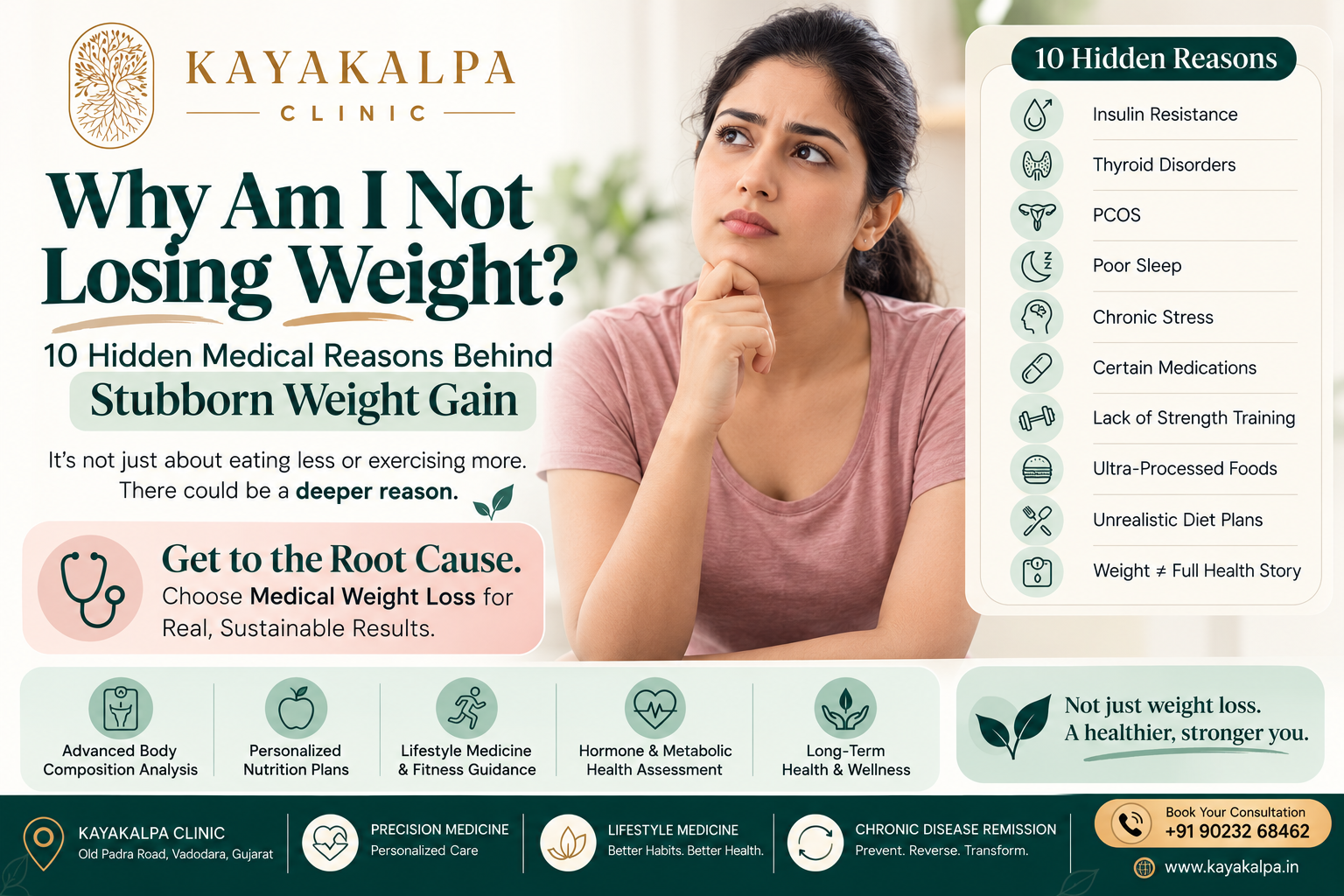
You’re Doing Everything Right… So Why Isn’t the Weight Coming Off?
“I hardly eat.”
“I go to the gym every day.”
“I’ve tried every diet.”
If these statements sound familiar, you’re not alone.
One of the biggest misconceptions about weight loss is that it’s simply a matter of eating less and exercising more. While nutrition and physical activity are essential, they are only part of the equation.
Weight gain is often influenced by hormones, metabolism, sleep, stress, genetics, and underlying medical conditions. If these factors aren’t addressed, losing weight can feel impossible — even with your best efforts.
At Kayakalpa Clinic, Vadodara, we focus on identifying the root cause of stubborn weight gain through Precision Medicine, Lifestyle Medicine, and Metabolic Health Assessment rather than prescribing one-size-fits-all diet plans.
1. Insulin Resistance: The Most Common Hidden Cause
Insulin resistance is one of the leading reasons why people struggle to lose weight.
When the body’s cells become less responsive to insulin:
- Fat storage increases
- Hunger becomes more frequent
- Sugar cravings intensify
- Belly fat accumulates
- Weight loss slows down
Many patients have insulin resistance years before diabetes develops.
Common signs include:
✔ Belly fat
✔ Fatigue after meals
✔ Sugar cravings
✔ Darkening of the skin around the neck or underarms
✔ High triglycerides
2. Thyroid Disorders
Your thyroid controls your body’s metabolic rate.
If it becomes underactive (hypothyroidism), you may experience:
- Unexplained weight gain
- Fatigue
- Hair fall
- Dry skin
- Constipation
- Feeling unusually cold
Proper thyroid evaluation is essential before starting any weight-loss program.
3. PCOS (Polycystic Ovary Syndrome)
Women with PCOS often face unique challenges with weight management.
Symptoms may include:
- Irregular periods
- Acne
- Excess facial hair
- Difficulty losing weight
- Insulin resistance
Addressing hormonal and metabolic factors together leads to better outcomes.
4. Poor Sleep
Sleeping less than 7 hours regularly can affect hormones that regulate hunger and fullness.
Poor sleep may:
- Increase appetite
- Reduce energy for exercise
- Increase cravings for sugary foods
- Slow metabolism
Improving sleep quality is often an overlooked part of weight management.
5. Chronic Stress
Stress increases cortisol levels, which can contribute to:
- Belly fat accumulation
- Emotional eating
- Increased cravings
- Poor sleep
Managing stress is as important as managing calories.
6. Certain Medications
Some medications may contribute to weight gain, including certain treatments for:
- Depression
- Diabetes
- Epilepsy
- Hormonal conditions
Never stop a prescribed medication without consulting your doctor, but discuss concerns about weight changes during your appointment.
7. Lack of Strength Training
Cardio burns calories, but muscle helps maintain a healthy metabolism.
Including resistance exercises can:
- Improve insulin sensitivity
- Increase muscle mass
- Support long-term fat loss
- Improve body composition
8. Ultra-Processed Foods
Even foods labeled as “healthy” can be high in calories, sugar, or unhealthy fats.
A balanced eating pattern focused on whole foods, adequate protein, vegetables, fruits, legumes, and healthy fats supports sustainable weight management.
9. Unrealistic Diet Plans
Extreme diets may produce rapid weight loss initially but are difficult to maintain.
Sustainable progress comes from habits that fit your daily life — not short-term restrictions.
10. Weight Is Only One Measure of Progress
The number on the scale doesn’t tell the whole story.
Successful weight management should also focus on:
- Reducing visceral fat
- Improving blood sugar control
- Lowering blood pressure
- Increasing muscle mass
- Enhancing energy levels
- Reducing chronic disease risk
Improving health is more important than simply achieving a lower number on the scale.
How Kayakalpa Clinic Helps You Achieve Sustainable Weight Loss
At Kayakalpa Clinic, we take a physician-led, evidence-based approach to weight management.
Your evaluation may include:
- Comprehensive medical consultation
- Body composition analysis
- Blood sugar and HbA1c assessment
- Thyroid evaluation
- Insulin resistance assessment
- Lifestyle and nutrition review
- Personalized treatment planning
Depending on your individual needs, your plan may include medical nutrition therapy, physical activity guidance, behavioral strategies, and, when clinically appropriate, evidence-based medications.
Our goal is not simply to help you lose weight — it is to improve your long-term metabolic health.
Looking for a Weight Loss Clinic in Vadodara?
If you’re searching for:
- Weight Loss Clinic in Vadodara
- Weight Loss Doctor in Vadodara
- Obesity Treatment in Vadodara
- Medical Weight Loss Vadodara
- Female General Physician in Vadodara
- Diabetes Doctor in Vadodara
- Thyroid Doctor in Vadodara
- Lifestyle Medicine Clinic in Vadodara
Dr. Shruthi Thennati and the team at Kayakalpa Clinic provide personalized, evidence-based care focused on sustainable weight management and chronic disease prevention.
🔗 Book Your Visit Today
Visit: 🌐 www.kayakalpa.in
📱 Call/WhatsApp: +91 90232 68462
📍 Google Maps: Kayakalpa Clinic, Old Padra Road